
When a comic is much more than a comic: Pays Noir
When a comic is much more than a comic: Pays Noir
The toil, life and death (many Italians) of the miners. Must read absolutely!
I hope that some publisher in Italy wants to translate and publish it.
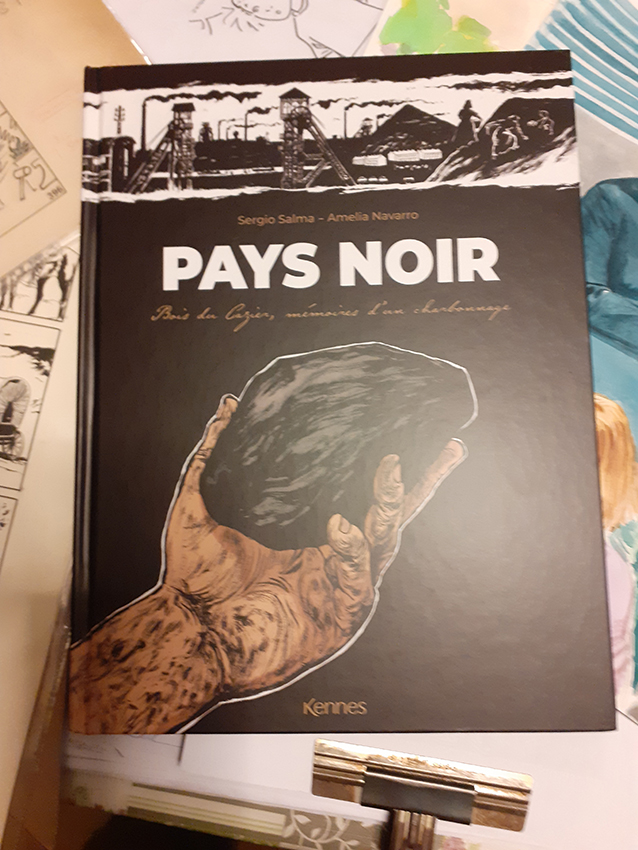

When a comic is much more than a comic: Pays Noir
The toil, life and death (many Italians) of the miners. Must read absolutely!
I hope that some publisher in Italy wants to translate and publish it.

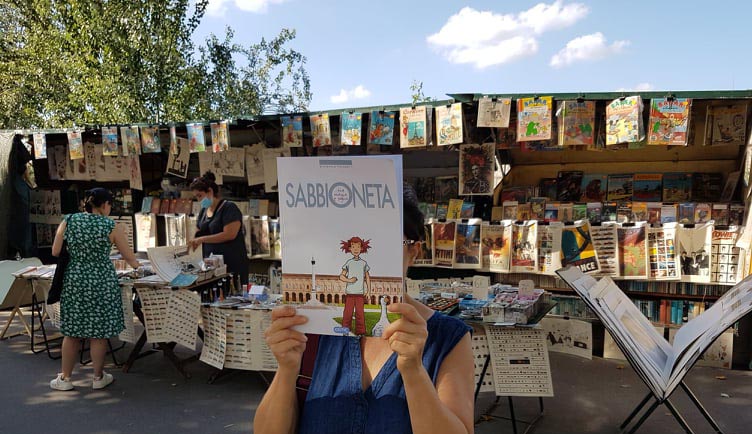
Sabbioneta graphic novel found in Paris
We have received a photo of our volume “Sabbioneta” found in Paris on the Seine for sale by a bouquiniste. Thanks to the anonymous buyer.

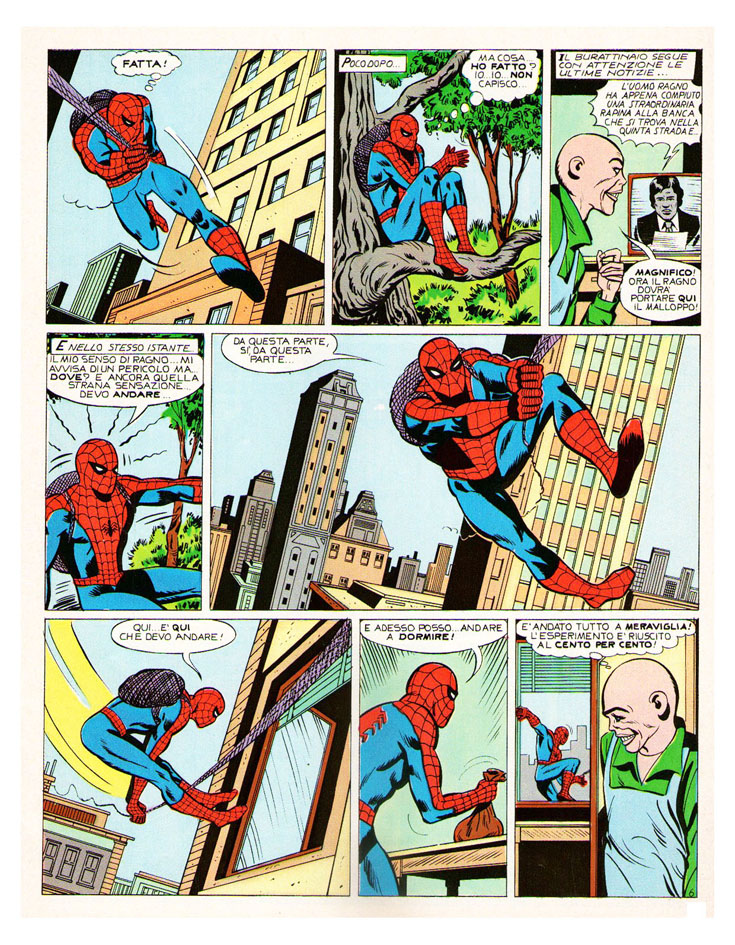
Spider-Man 60th anniversary Italian
Nel nostro piccolo anche noi abbiamo celebrato il tessiragnatele. SuperGulp! Fumetti in TV è stato un programma televisivo dedicato al mondo dei fumetti trasmesso dalla RAI e creato da Guido De Maria e Giancarlo Governi, con le musiche di Franco Godi nel 1972. Alla ripresa del programma nel 1977 la Mondadori mandò in edicola un settimanale a fumetti con lo stesso titolo SuperGulp che riprendeva (in parte) i personaggi della trasmissione. Furono realizzati episodi dei maggiori supereroi dell’epoca, quali i Fantastici Quattro e L’Uomoragno. Qui uno degli episodi realizzati da Giancarlo Malagutti e Giorgio Montorio.

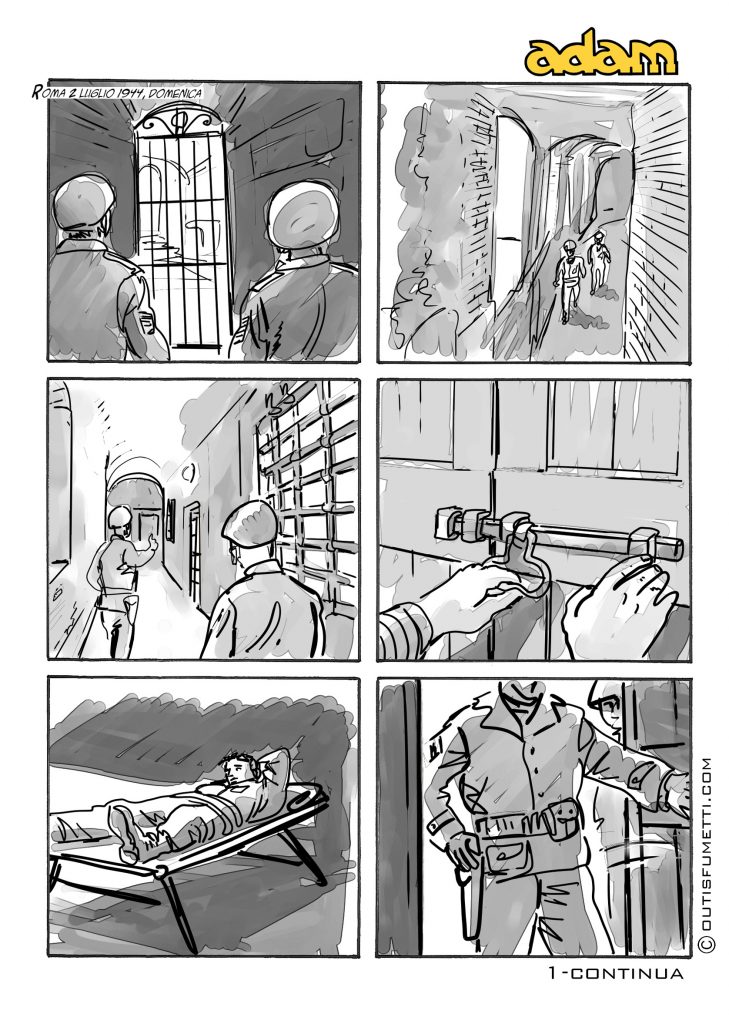
Rome 1944 Adam new adventure
Adam‘s new adventure Rome Open City 1944
Rome, Open City (Italian: Roma città aperta, also released as Open City) is a 1945 Italian neorealist war drama film directed by Roberto Rossellini and co-written by Sergio Amidei and Federico Fellini. Set in Rome in 1944, the film follows a diverse group of characters coping under the Nazi occupation, and centers on a Resistance fighter trying to escape the city with the help of a Catholic priest. The title refers to Rome being declared an open city after 14 August 1943. It forms the first third of Rosselini’s “Neorealist Trilogy”, followed by Paisan (1946) and Germany, Year Zero (1948).
Open City is considered one of the most important and representative works of Italian neorealism, and an important stepping stone for Italian filmmaking as a whole. It was one of the first post-war Italian pictures to gain major acclaim and accolades internationally, winning the prestigious Palme d’Or at the 1946 Cannes Film Festival and being nominated for Best Adapted Screenplay Oscar at the 19th Academy Awards. It launched director Rosselini, screenwriter Fellini, and actress Anna Magnani into the international spotlight.

Adam‘s new adventure Rome Open City 1944
Rome, Open City (Italian: Roma città aperta, also released as Open City) is a 1945 Italian neorealist war drama film directed by Roberto Rossellini and co-written by Sergio Amidei and Federico Fellini. Set in Rome in 1944, the film follows a diverse group of characters coping under the Nazi occupation, and centers on a Resistance fighter trying to escape the city with the help of a Catholic priest. The title refers to Rome being declared an open city after 14 August 1943. It forms the first third of Rosselini’s “Neorealist Trilogy”, followed by Paisan (1946) and Germany, Year Zero (1948).
Open City is considered one of the most important and representative works of Italian neorealism, and an important stepping stone for Italian filmmaking as a whole. It was one of the first post-war Italian pictures to gain major acclaim and accolades internationally, winning the prestigious Palme d’Or at the 1946 Cannes Film Festival and being nominated for Best Adapted Screenplay Oscar at the 19th Academy Awards. It launched director Rosselini, screenwriter Fellini, and actress Anna Magnani into the international spotlight.

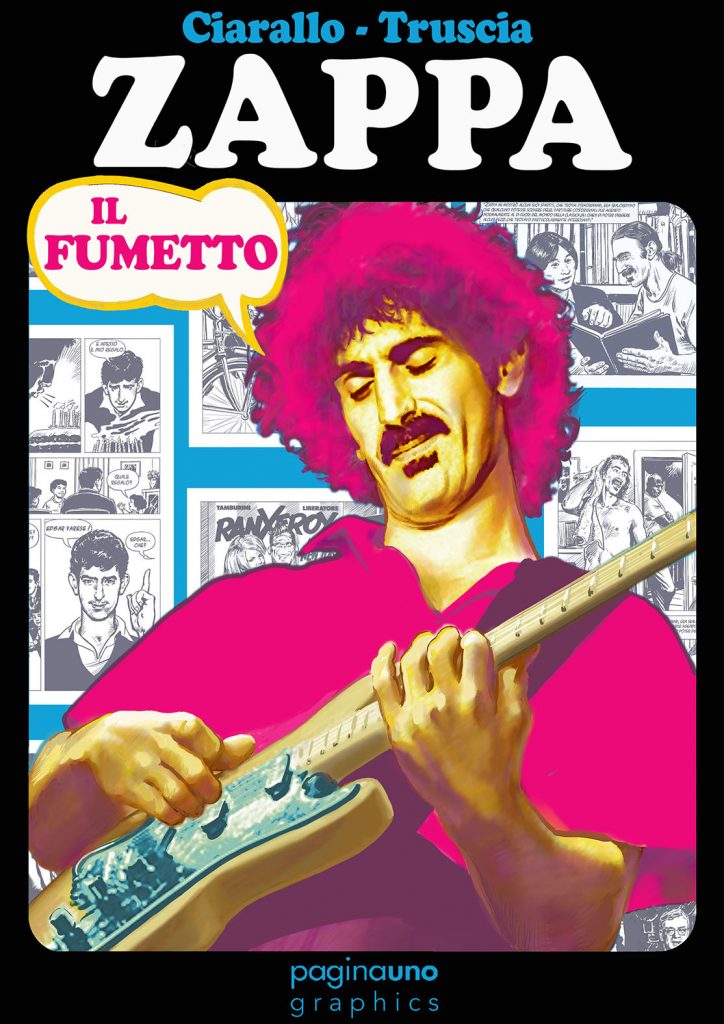
Frank Zappa biopic graphic novel
Nelle prossime settimane uscirà (per Paginauno La Casa Editrice) nelle librerie e sarà acquistabile su tutte le piattaforme librarie e-commerce, il volume “Zappa – il fumetto”. Racconto della vita del grande musicista americano Frank Zappa. Ideato e sceneggiato da Giuseppe Ciarallo e illustrato (con tavole a colori e in b/n) da Manlio Truscia. A impreziosire il libro ci sono 14 tavole a colori di altrettanti illustratori.

My Prince Valiant
I remember that, at the age of 7 or 8 years old, we were living in a friend’s house in Burbank. I can still recall the nice house on a hill with a park just down the road. Dad, who noticed how easily I got bored would bring me along to visit the spots in the district, in search of a location for the strips he was preparing. We would often stop for breakfast at his friend H’s place, who also had a huge collection of original comics and strips. It was during one of these visits that I met Prince Valiant of Harold Foster. Dad’s friend did not have – strange to say – a fetishistic rapport with his collections. He did keep the originals in transparent envelopes, (acid-free for sure) but allowed me to take a look, leaf through them without manifesting any anxiety. I recall those tables, that were just my height. Sprawled on the carpet of the study and with the pages strewn all over the place, I would practically immerse myself in those gigantic pages.

Before Little Nemo: le petit Lucien
Little Nemo et le petit Lucien. La planche ci-dessus est l’une des premières de l’« Imagerie artistique » publiées par la maison Quantin. « Un rêve agité » est la onzième de la première série de cette collection de planches pour enfants, et fut publiée en 1886. Elle n’est pas signée, mais son attribution au dessinateur Job laisse peu de doute.
De son vrai nom Jacques-Marie Gaston Onfray de Bréville, Job (1858-1931) est issu d’une famille appartenant à la vieille noblesse. Après le lycée, son père refusant qu’il entre à l’École des beaux-arts, il s’engage dans l’armée pour cinq ans. Puis, entre 1882 et 1885, il intègre les Beaux-Arts et se forme dans les ateliers des peintres Carolus Duran et Evariste Luminais. Il expose alors régulièrement au Salon des artistes français, principalement des scènes militaires. Ses premières années d’artiste sont également marquées pas la caricature politique et de moeurs. Il collabore un temps à des journaux comme Le Monde Parisienou La Nouvelle Lune.
Job fait partie de cette jeune génération qui pratique l’histoire en images. Il en donne ainsi régulièrement à La Caricature, journal crée par Albert Robida, dès 1883. Souhaitant renouveler l’imagerie enfantine, Albert Quantin fait naturellement appel à lui, avec Caran d’Ache, Steinlen ou Christophe, pour revivifier la formule spinalienne vieillissante. Ce sera le début de sa carrière d’illustrateur pour la littérature enfantine. Job nous reste aujourd’hui en mémoire pour ses beaux ouvrages illustrés pour les jeunes lecteurs retraçant, non sans patriotisme, des histoires militaires et les légendes napoléoniennes dont les textes furent souvent signés par Georges Montorgueil.
Un rêve raconté en images
Que raconte cette planche de l’imagerie Quantin ? Dans son lit, le jeune Lucien s’endort avec à ses côtés Sultan, le cheval de bois qu’on vient de lui offrir. L’enfant rêve alors qu’il est un élégant cavalier qui monte son jouet devenu vivant. Il parade crânement devant ses camarades de pension et son professeur M. Plume-d’oie. Voulant épater son assistance, Lucien augmente la cadence et passe au trot. Mais soudain, sa monture s’emporte et le cavalier ne la maîtrise plus. Elle accélère jusqu’à ce que les passants, effrayés, ne distinguent même plus le cavalier et son cheval ! Arrivé sur les quais, l’animal s’arrête net et Lucien passe par-dessus bord. Mais le garçon se réveille, tombant de son lit. Ce n’était qu’un rêve.


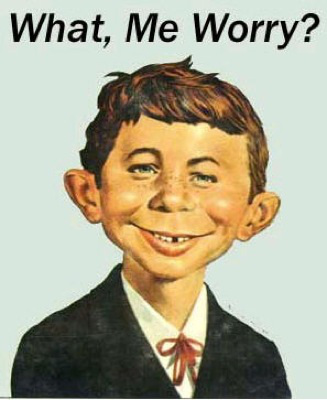
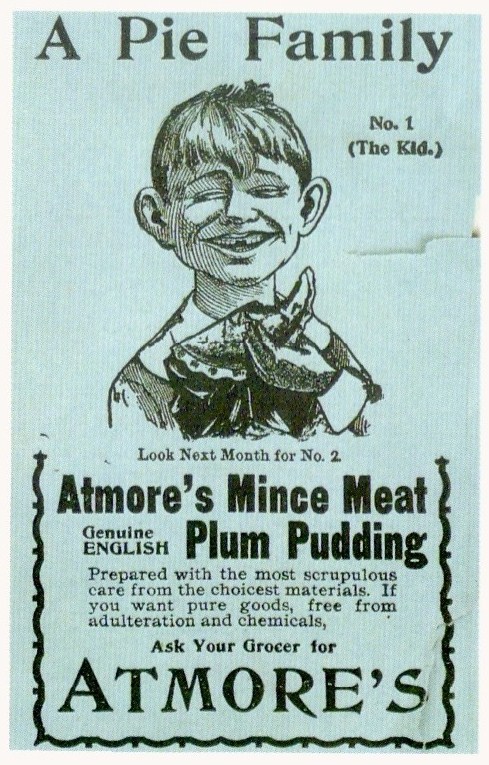
Dopo diverse apparizioni all’interno del magazine Mad nel numero 30 del dicembre 1956 Alfred E. Neuman conquista la copertina e diventa l’immagine iconica del giornale. Si fa risalire l’immagine del ragazzino senza un dente a pubblicità di dentisti fino a quella di the Kid che appare su una pubblicità di un pudding inglese apparsa sull’edizione di New York edition de the Illustrated London News e McClures nel1895.
Nuove ricerche lo fanno risalire a un character comico teatrale, New Boy.
Leggere tutto qui.
