Tag Archivio per: MUSIC RECORDING MANAGEMENT

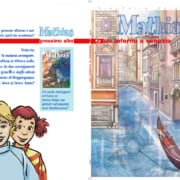
Anna & Mathias volume 2

Anna & Mathias volume 2 scheduled for fall-winter 2016.

Adventure in Venice “un Inferno a Venezia”.

Books in Italian, French, English, Spanish.

SERIE: Mathias

STORY/ART: Giancarlo Malagutti

GENRE: Adventure/Mystery/Thriller/Fantasy

TARGET READERSHIP: All ages, both sexes

SETTING: Well known and characteristic cities and locations in Italy

SET IN: The Present Day

STRUCTURE & TONE OF THE STORIES: The two protagonists in this series are

children and, despite their superhuman potentialities, they behave as such. They always

travel accompanied by an adult, they never go out late at night and wherever they stay

they’re in the company of relatives. It is within this context that the storyline develops in

its own way. They’re not out to put the world to rights, yet they are endowed with a

strong sense of justice and they seek to do good in the face of evil.

COLLECTION: Each episode is 44 pages long and is a complete and free-standing story.

Reading them in order is recommended. In full colors.

5 episodes ready for print.

THE PROTAGONISTS:

Mathias is a blond 10 year-old. He’s knowledgeable for his age as a result of his

somewhat cosmopolitan education.

Anna is a freckly 10 year-old redhead. Orphaned at an early age she has an elderly

bedridden granny. Lively, intelligent and with a searching mind, she’s the one with the

sense of humour and sharp one liners.

ARTIST BIO: Giancarlo Malagutti began his career in 1973 by drawing cartoons for the monthly publication Horror. He has worked alongside Renzo Barbieri and Giorgio Cavedon on several cartoons. Malagutti has drawn several one off short stories for Intrepido, Monello and Albo TV and has inked the drawings of Sergio Zaniboni for Diabolik which is where he began to write scripts. In 1981 he began freelancing for IF, working on Japanese cartoons including Princess Zaffiro, Tiger Man and Bia. In 1982 he created the series The Reporters drawn by Zaniboni for Orient Express. After having written a story line for Martin Mystère he worked as a commercial artist for some twelve years until 1994 when he resumed his work in cartoons, writing stories for Lupo Alberto, Cattivik and Mystère. Most recently he has been working on the characters of Chris Carella in collaboration with Sergio Zaniboni and both the drawings and script for Mathias www.mathias.is.it

(For a short biography visit http://www.lambiek.net/artists/m/malagutti_giancarlo.htm)

Personnages principaux:

Mathias est un normal garcon de 9 ans, blondin, mignon. fils de parents aisés qui, à cause de leur travail, lui font parcourir le vaste monde. Il a une bonne culture, malgré son âge, grâce a sa formation cosmopolite. En certaines situations, spécialement lorsque il est sous stress, il réussit à modifier (pour des petites choses) la réalité.

Anna: fillette de 9 ans, cheveux roux et lentilles. Orpheline, elle vit avec une grand-mère agée immobilisée au lit. Tres éveillée, intelligente et curieuse. C’est elle qui s’occupe de sa grand-mère. Elle vit avec l’épée de Damoclés d’être envoyée dans un orphelinat et sa grand-mère expediée à l’hospice de pauvres. très indigente, son unique revenu est la pension de sa grand-mère. Elle parâit seulement dans cet épisode mais elle peut revenir.

Texte/dessins: Giancarlo Malagutti

Genre: mystery/humour/ fantasy

Target: 8/12 ans (mais adultes aussi)

Recostitution: World

Epoque: de notre temps

Giancarlo Malagutti.

Il fait ses débuts en 1973 en réalisant les crayons de quelques histires pour la publication mensuelle Horror (Ed.Astoria). Il dessine quelques histoire sur L’Intrepido, L’Albo et Il Monello (Ed. Universo), Il encre les crayons de S.Zaniboni pour Diabolik.

En 1981 il réalise  la version en bandes dessinées des séries  télévisées de Princesse Saphir, Homme Tigre, Bia. En 1982 il crée la série “The Reporters”

dessinée par Sergio Zaniboni. Aprés avoir écrit pour Martin Mystére (Sergio Bonelli Editore), il se consacre au travail publicitaire et quitte pour le moment l’activité d’auteur de BD  qu’il reprend quelques années aprés en écrivant des scénarios de Lupo Alberto et Cattivik (Acme/macchia nera) et Martin Mystére

the Reporters 6 of 3

the Reporters 6 of 3

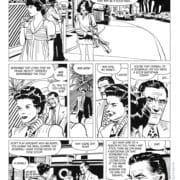
The adventures of The reporters (new episode #3), two T. V. journalists whose jobs lead them to come up against major and minor dramas.

To give an idea of the style, their stories resemble the T. V. series Hill Street Blues and N.Y. Police Dept. Besides the story, the human side of the main characters and their interpersonal relationships are developed.

The main characters:

Harry, the eldest, once a newspaper reporter (like Lou Grant) changed over to T. V. during the Vietnam period. His thorny character keeps him away from office work and leads him to work out and about with his colleague Allen. Divorced, his wife Linda does not want to see him so he communicates through their daughter Kay, who lives with him.

Allen, Harrys young colleague, whose experience so far has been in television, has been teamed up with the older man to learn the trade. More easy-going and lighter-hearted, a sense of genuine affection binds him to Harry and his feelings for Kay go even deeper.

Kay, Harrys 18 years old daughter is her sophomore year of college majoring in English literature. Even though she has nothing to do with the work of her father and Allen, she seems to fit in with them perfectly. She longs to eventually become a script writer and her closeness to Hollywood is for her a constant inspiration. She is not unaware of Allens shy advances but she keeps him at a distance while at the same time stringing him along.

Four episodes made so far:

1) An elderly rival journalist, who feels his life is passing before him without his having accomplished anything, gets into serious trouble by trying to murder someone so as to be able to do a good deed.

2) Misguided young journalist friend of Allens pointlessly needles the powers that be of the gangster world by creating a fake scoop.

3) Harry passes up a scoop so as not to ruin the few remaining months left in the life of an elderly actor forced to make soap operas to survive.

4) Kay, attracted by the movie world, meets a director but her life is endangered by the mans mental instability, brought to a peak by  divorce.

rep03_06ITA

Monica Literary Agency

Monica Literary Agency Opening Office in Santa Monica, fall 2016

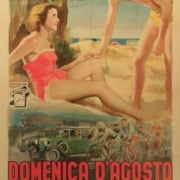
Domenica d’Agosto Movie

Domenica d’Agosto Movie.

Favourite film territory here and this is quite a discovery. On a summer weekend the whole of Rome is piling down to the beach at Ostia. About eight separate threads follow various groups and individuals having their day out: a working class family including a couple of nubile young ladies; a bunch of cyclists plus a kid brother on the crossbar; a jaded man who can’t bear to be apart from his young daughter at the adjacent summer camp; an aristocratic gathering at the private beach club on the other side. The film, like the beach, is bursting with life. Situations are developed and resolved with breath-taking wit and economy as relationships are formed, ended, or otherwise worked out. The long day had by all is suffused with the overarching irony that their supposedly leisurely day out is actually quite exhausting. Everyone shares the limelight in equal measure; Mastroianni appears in his first significant role, but standing out is Anna Baldini – whose one and only film appearance this is and her nascent relationship with Franco Interlenghi is perhaps the film’s centrepiece: truly great the wistful music as the couple get lost and start their long isolated walk back through the maquis – the director being fully aware of what the characters are not: that through all the chaos, this is the time of everyone’s life. I don’t mind admitting that it had me welling up many times simply because it was so satisfying, or perhaps because it managed to remind me that I’m still human.


Domenicadagosto-1950-Mastroianni


It’s August in Rome and it seems like the whole town has a single mission – go to the beach! You can watch this charming, time-capsule of a movie below (76 minutes). In this light comedy, categorized under “Pink Neorealism,” precursor to later Italian comedy genre (considering that just a year earlier in 1948 Vittorio di Sica released the emblematic Neorealistic film Bicycle Thieves featuring real existential needs!) – director Luciano Emmer provides a much lighter view of post-WWII Italian society.

The plot leverages what I call “channel-zapping” storytelling technique, where four distinct stories are switched back and forth: the cyclists, the big common family, the rich folks and the humble couple. Four stories for which apparently only two are connected, vividly paint a lively, and quiet authentic picture of summer pastime habits of Romans in the late 1940’s.

the Reporters episode 3 #5

the Reporters episode 3 #5

The adventures of The reporters (new episode #3), two T. V. journalists whose jobs lead them to come up against major and minor dramas.

To give an idea of the style, their stories resemble the T. V. series Hill Street Blues and N.Y. Police Dept. Besides the story, the human side of the main characters and their interpersonal relationships are developed.

rep03_05ITA


The main characters:

Harry, the eldest, once a newspaper reporter (like Lou Grant) changed over to T. V. during the Vietnam period. His thorny character keeps him away from office work and leads him to work out and about with his colleague Allen. Divorced, his wife Linda does not want to see him so he communicates through their daughter Kay, who lives with him.

Allen, Harrys young colleague, whose experience so far has been in television, has been teamed up with the older man to learn the trade. More easy-going and lighter-hearted, a sense of genuine affection binds him to Harry and his feelings for Kay go even deeper.

Kay, Harrys 18 years old daughter is her sophomore year of college majoring in English literature. Even though she has nothing to do with the work of her father and Allen, she seems to fit in with them perfectly. She longs to eventually become a script writer and her closeness to Hollywood is for her a constant inspiration. She is not unaware of Allens shy advances but she keeps him at a distance while at the same time stringing him along.

Four episodes made so far:

1) An elderly rival journalist, who feels his life is passing before him without his having accomplished anything, gets into serious trouble by trying to murder someone so as to be able to do a good deed.

2) Misguided young journalist friend of Allens pointlessly needles the powers that be of the gangster world by creating a fake scoop.

3) Harry passes up a scoop so as not to ruin the few remaining months left in the life of an elderly actor forced to make soap operas to survive.

4) Kay, attracted by the movie world, meets a director but her life is endangered by the mans mental instability, brought to a peak by  divorce.

Commissario Spada by Gianni De Luca

Commissario Spada by Gianni De Luca.

Gianni de Luca (Gagliato, 27 gennaio 1927Roma, 6 giugno 1991) è stato un fumettista, illustratore, pittore e incisore italiano.

https://it.wikipedia.org/wiki/Gianni_de_Luca#Il_commissario_Spada

Il commissario Spada

Dopo alcuni anni dedicati all’illustrazione, il 1967 segna il ritorno al fumetto con L’ultima Atlantide, storia dai toni melodrammatici ospitata sulle pagine de Il Giornalino a tutta pagina a colori. Ristampata una prima volta in bianco e nero e in formato leggermente ridotto su Comics di marzo/maggio 1974, in calce alla prima tavola si legge la data di esecuzione: 6 marzo 1957, ma già alla 4ª tavola si passa alla firma autografa seguita da 64 (1964).

Il 1969 è un anno molto importante nella carriera di de Luca. Non solo per il suo ritorno definitivo al fumetto con Bob Jason, ciclo di genere western, ma soprattutto è l’anno che precede l’esordio, sempre sulle pagine de Il Giornalino, del commissario Eugenio Spada, le cui avventure vengono scritte dal giornalista e scrittore di fantascienza Gian Luigi Gonano, che alla fine degli anni sessanta lavora ancora come freelance a Parigi. I due autori vengono presentati da Gino Tomaselli, redattore della testata e modello per la prima versione di Spada, nonché ispiratore della serie: il personaggio di Spada è in sé semplice ma assolutamente innovativo per molti motivi. In primo luogo la rivista che lo pubblicava era un giornale rivolto ai ragazzi e ai giovani, a quel tempo distribuito soprattutto nelle parrocchie e questo dà l’idea di quanto coraggiosa potesse essere la proposta; poi, a differenza di molti altri fumetti dell’epoca, era assolutamente aderente alla realtà violenta di tutti i giorni, in particolare a quella di Milano. I due autori, grazie al contemporaneo appoggio della redazione, dell’editore e del pubblico, poterono continuare fino al 1982 nella loro opera: da un lato Gonano con testi e storie assolutamente attuali (indagini classiche, criminalità organizzata, sette sataniche, terroristi, assassini, sono solo alcuni dei temi trattati) e con soventi alleggerimenti (grazie al sapiente utilizzo del figlio di Spada, Mario, ed all’inserimento di gag e trovate comiche utili a spezzare la tensione), dall’altro i personaggi asciutti e al contempo nervosi di de Luca, dettagliati ed espressivi.

Così, mentre oltreoceano il fumetto era uscito dalla rivoluzione cinematografica dello Spirit eisneriano, in Italia Gianni de Luca proponeva tavole con vignette orizzontali, sagome appena abbozzate per dare l’idea del movimento e, sempre per lo stesso motivo, personaggi presenti più volte nella stessa vignetta, quasi come se non si accontentassero dell’angusto spazio offerto dalla griglia classica. Questa idea, abbastanza ardita ma al tempo stesso apprezzata, viene portata ai massimi livelli quando viene proposto all’artista calabrese di realizzare una versione a fumetti di tre grandi opere shakespearianeAmletoLa tempesta e Romeo e Giulietta.


the Reporters episode 3 page 4

The adventures of The reporters (new episode #3), two T. V. journalists whose jobs lead them to come up against major and minor dramas.

To give an idea of the style, their stories resemble the T. V. series Hill Street Blues and N.Y. Police Dept. Besides the story, the human side of the main characters and their interpersonal relationships are developed.

rep3_4ITA

The main characters:

Harry, the eldest, once a newspaper reporter (like Lou Grant) changed over to T. V. during the Vietnam period. His thorny character keeps him away from office work and leads him to work out and about with his colleague Allen. Divorced, his wife Linda does not want to see him so he communicates through their daughter Kay, who lives with him.

Allen, Harrys young colleague, whose experience so far has been in television, has been teamed up with the older man to learn the trade. More easy-going and lighter-hearted, a sense of genuine affection binds him to Harry and his feelings for Kay go even deeper.

Kay, Harrys 18 years old daughter is her sophomore year of college majoring in English literature. Even though she has nothing to do with the work of her father and Allen, she seems to fit in with them perfectly. She longs to eventually become a script writer and her closeness to Hollywood is for her a constant inspiration. She is not unaware of Allens shy advances but she keeps him at a distance while at the same time stringing him along.

Four episodes made so far:

1) An elderly rival journalist, who feels his life is passing before him without his having accomplished anything, gets into serious trouble by trying to murder someone so as to be able to do a good deed.

2) Misguided young journalist friend of Allens pointlessly needles the powers that be of the gangster world by creating a fake scoop.

3) Harry passes up a scoop so as not to ruin the few remaining months left in the life of an elderly actor forced to make soap operas to survive.

4) Kay, attracted by the movie world, meets a director but her life is endangered by the mans mental instability, brought to a peak by  divorce.

Port_coverfronte


Dizionario FumettiCinema e Fumo di China

Il Dizionario FumettiCinema è recensito su Fumo di China.
Quando il fumetto diventa un film (o una serie TV): dieci grandi successi e curiosità da non perdere

Cover-FdC252-253


1) Yellow kid e il film (mai fatto) con Stanlio
Mickey Dugan, meglio noto come The Yellow Kid, protagonista della pagina a fumetti Hogan’s Alley, è convenzionalmente considerato il primo fumetto moderno. Il successo arrivò nel 1895 quando, il 5 maggio, debuttò sul supplemento domenicale a colori del New York World. Il Kid ha anche il primato di vedersi attribuito un film live interpretato nientemeno che da Stan Laurel. Nessuno ha mai visto nemmeno un fotogramma di questo film. Perché? Semplice, non esiste. In quell’anno, il 1910 Laurel non era nemmeno negli Stati Uniti e fonti attendibili hanno sempre smentito l’esistenza di questo film.


2) Achille Talon o Walter Melon?
Achille Talon è il protagonista di divertenti situazioni comiche – spesso di una sola pagina – creato dal cartoonist Greg nel 1963. Come molti altri personaggi ha avuto la sua serie animata ma chi lo cercasse sulle programmazioni TV non lo troverebbe. Infatti per il mercato – non di lingua francese – il nome è stato cambiato – non si capisce perché – in Walter Melon. Eppure non sembra difficile pronunciare il nome originale sia in inglese che italiano e altre lingue. Inoltre Achille Talon è anche un simpatico gioco di parole.


3) Il giornalista avventuriero
Una serie a fumetti non nasce obbligatoriamente da un soggetto originale, da un film o dalla trasposizione su carta da TV o cinema. Jean-Michel Charlier, geniale scrittore francese creatore – tra gli altri – di Buck Danny e Blueberry crea una appassionante saga avventurosa prendendo spunto da una trasmissione giornalistica di Radio Luxembourg: Allo D.M.A. Il protagonista, Guy Lebleu, è ispirato a Michel Leblanc vero reporter dell’emittente bruxellese.


4) I francesi scoprono Macario
L’attore comico italiano Erminio Macario ebbe l’onore – come molti comici della sua epoca – di essere il protagonista di un fumetto, ad opera di Giovanni Manca, pubblicato su il Corriere dei Piccoli nel 1942 con il nome di Macarietto. Ma pochi sanno che un giornale francese fece, nel 1947, una riduzione a strisce dal film Come persi la guerra interpretato da Macario.


5) La stagione d’oro dei serial: da Flash Gordon e Tarzan
In questi ultimi tempi sul grande schermo imperversano film derivati da serie e personaggi dei fumetti ma se si crede che questa moda sia dei nostri anni si è in errore. Negli anni trenta-quaranta molti personaggi di carta, in particolare quelli che venivano pubblicati in forma di strisce giornaliere dai quotidiani e che avevano un seguito di centinaia di migliaia di lettori – vennero trasportati in serials di 12 o più episodi proiettati con cadenza settimanale. Tra questi, Flash Gordon, Jungle Jim, Captain Marvel, Ace Drummond, Dick Tracy, Tarzan.


6) Supercar, 90 episodi, un fumetto
Come si può leggere e scoprire nei nostri volumi dedicati al cinema e fumetto quasi tutte le serie TV hanno avuto una loro edizione a fumetti ma è curioso che la serieKnight Rider (Supercar in Italia) – che godette di buon successo negli anni ’80 – abbia stimolato la creatività dell’editoria francese e un episodio (uno solo) ha avuto il suo albo disegnato. Sarebbe curioso conoscere perché la scelta cadde su questa singola puntata. La 75 per la precisione.


7) Men In Black
The Men in Black è stato un fumetto scritto da Lowell Cunningham, illustrato da Sandy Carruthers e pubblicato dalla Aircel Comics. La pubblicazione di per se non era niente di eccezionale e – se ci è permesso – anche un poco bruttino. Ma l’idea era forte e non è sfuggita ai talent-scout di Hollywood. E infatti acquistati i diritti il fumetto ha dato il via alla produzione di 3 film live, una serie TV e una a cartoni. Men in Black è stato un grande successo commerciale a conferma che se una idea è originale prima o poi sfonda.


8) L’attore ideale per Corto Maltese?
Corto Maltese, iconico personaggio di Hugo Pratt sembra abbia tentato, nel corso degli anni, molti cineasti per una trasposizione cinematografica che però non abbiamo mai avuto. Voce comune vuole che il nulla di fatto sia imputabile ai continui dinieghi dell’autore che non vedeva un interprete adatto a incarnare il suo marinaio. Oggi scomparso Pratt non sapremo mai la verità. Di Corto possiamo godere dell’ottima riduzione animata.


9) Gli Addams
Film e serial TV attingono da serie a fumetti e, a volte, da graphic novel, comunque sempre produzioni composte da un buon numero di tavole e già molto sviluppati. Ma poichè ogni regola – più o meno scritta – ha le sue eccezioni una serie di fiction può partire anche da vignette umoristiche composte di un solo quadro. E’ il caso dei cartoons – di humur nero – di Charles Addams pubblicate sul the Newyorker a partire dagli anni trenta. Da oltre 50 anni la famiglia Addams – come venne battezzata – non ha smesso di divertire con numerose produzioni, serie TV, film, varie riduzioni a cartoni animati e pieces teatrali. E sicuramente non è finita.


10) Il musical
Arnold Melville è uno strano bambino dal carattere volubile protagonista di una striscia a fumetti che al suo apice venne pubblicata su 56 quotidiani, dal 1982 al 1988. La striscia era caratterizzata da un umorismo eccentrico e anticonvenzionale. Uno dei luoghi frequentati era la mensa della scuola dove Arnold aveva modo di manifestare il suo odio per la maionese che lui chiamava “la morte bianca”. Della strip ne è stata realizzata, negli stati Uniti, una versione teatrale in musical dal gruppo Pioneer Drama Service.


10a) Tex Willer e Mister No
Nel 1985, il film di Duccio Tessari su Tex Willer deluse le aspettative dei moltissimi fans. Il film Tex Willer e il Signore degli abissi tratto dall’episodio El Morisco (albi dal n. 101 al 103) scritta da Gian Luigi Bonelli e disegnata da Guglielmo Letteri. Nelle intenzioni dei produttori doveva essere il pilota di una serie televisiva ma lo scarso entusiasmo che accolse il pilota lo fece esaurire in un solo film. Forse è questo il motivo che – scottato dall’ esperienza non entusiasmante – Sergio Bonelli disse sempre di no al film su Mister No.


dizionario fumetto

Giancarlo Malagutti è fumettista, sceneggiatore e inchiostratore tra i vari lavori anche delle tavole di Sergio Zaniboni per Diabolik. Già presente su ilmiolibro con diverse storie a fumetti,  di recente ha dato il via alla pubblicazione del  “Dizionario fumetto cinema”,  enciclopedia che raccoglie tutti i fumetti tradotti in film, serie tv, cartoni animati, spettacoli teatrali e di marionette, radio serials. Uno strumento di lavoro per i professionisti e un divertimento assicurato per appassionati. Il libro è disponibile su ilmiolibro.it.


Fumetto/Cinema dizionario seconda edizione

Il dizionario cinema/fumetto alla seconda edizione. Con qualche correzione e nuove schede.

fall/winter volume Due “B”

dizionario_cinema_fumetto_B


Dizionario cinema fumetto, prefazione di  Werther Gorni Direttore de la Nuova Cronaca di Mantova Alba del terzo millennio. Il futuro è già oggi. Tecnologia che trionfa ovunque. Informazioni in tempo reale. Per assurdo, notizie quasi in anticipo. Chi può fermare questo processo-progresso? Chissà dove porterà l’uomo. Eppure il mondo ha necessità di fare piccole pause per riflettere e guardarsi attorno. Magari anche per sorridere, ironizzare, sognare. Ecco che il “matrimonio” tra visione reale e immaginazione funziona ancora. Il cinema e il fumetto. Due invenzioni che hanno alla loro origine l’arte della creatività. Cinema e fumetto uniti proprio dal fatto di volere trasmettere messaggi e raccontare storie allo spettatore.La celluloide e la carta si sono…

continua su:  afnews

The adventures of The reporters #3

The adventures of The reporters (new episode #3), two T. V. journalists whose jobs lead them to come up against major and minor dramas.

To give an idea of the style, their stories resemble the T. V. series Hill Street Blues and N.Y. Police Dept. Besides the story, the human side of the main characters and their interpersonal relationships are developed.

rep03_03ITA

The main characters:

Harry, the eldest, once a newspaper reporter (like Lou Grant) changed over to T. V. during the Vietnam period. His thorny character keeps him away from office work and leads him to work out and about with his colleague Allen. Divorced, his wife Linda does not want to see him so he communicates through their daughter Kay, who lives with him.

Allen, Harrys young colleague, whose experience so far has been in television, has been teamed up with the older man to learn the trade. More easy-going and lighter-hearted, a sense of genuine affection binds him to Harry and his feelings for Kay go even deeper.

Kay, Harrys 18 years old daughter is her sophomore year of college majoring in English literature. Even though she has nothing to do with the work of her father and Allen, she seems to fit in with them perfectly. She longs to eventually become a script writer and her closeness to Hollywood is for her a constant inspiration. She is not unaware of Allens shy advances but she keeps him at a distance while at the same time stringing him along.

Four episodes made so far:

1) An elderly rival journalist, who feels his life is passing before him without his having accomplished anything, gets into serious trouble by trying to murder someone so as to be able to do a good deed.

2) Misguided young journalist friend of Allens pointlessly needles the powers that be of the gangster world by creating a fake scoop.

3) Harry passes up a scoop so as not to ruin the few remaining months left in the life of an elderly actor forced to make soap operas to survive.

4) Kay, attracted by the movie world, meets a director but her life is endangered by the mans mental instability, brought to a peak by  divorce.