Tag Archivio per: Walter Booth

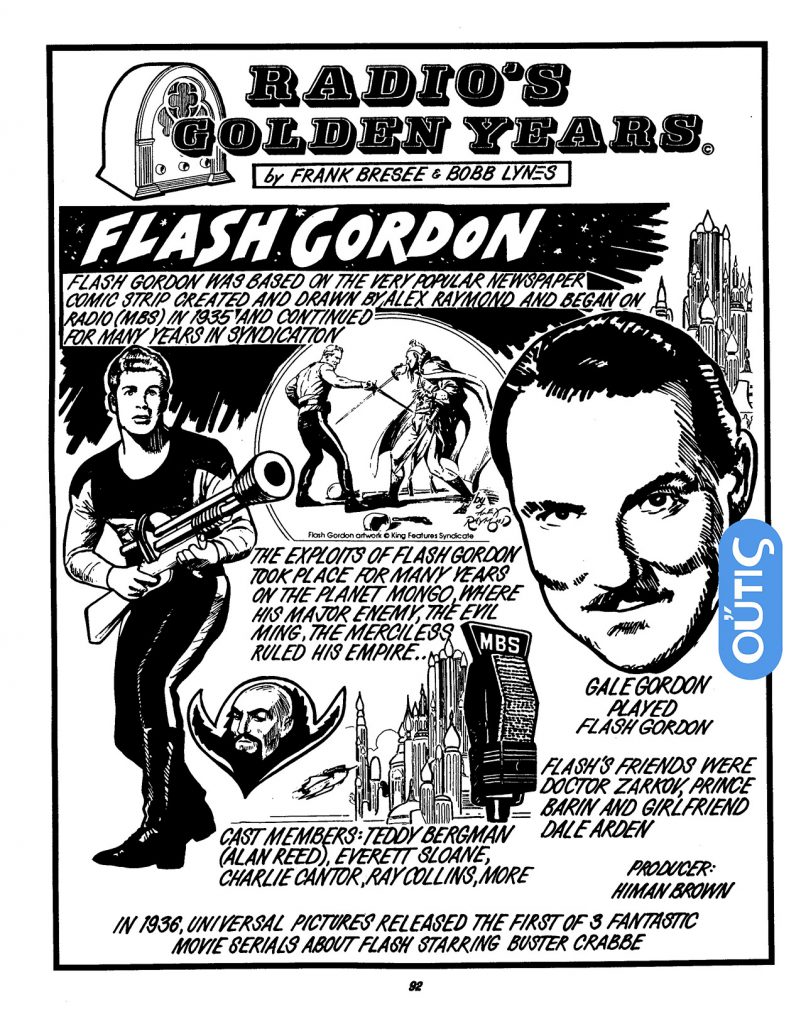
Flash Gordon meets Jungle Jim Crossover

Flash Gordon meets Jungle Jim Crossover 

Titolo: The Amazing Interplanetary Adventures of Flash Gordon 

Genere: serial radiofonico 

Personaggio: Flash Gordon (dal fumetto omonimo)

Registrato a New York 

Data: 27 Aprile – 26 Ottobre 1935 

Reti: Mutual Broadcasting System (West Coast)

Episodi: 26

Durata: 15 minuti

Paese: USA

Nell’episodio finale (puntata 26) Flash Gordon (voce Gale Gordon), Dale Arden (sconosciuta) e il dottor Hans Zarkov (voce Maurice Franklin) fanno ritorno sulla terra e atterrano nella giungla. Qui incontrano Un altro personaggio di Alex Raymond, Jungle Jim (voce Matt Crowley).

In questo episodio da finale di stagione Flash e Dale si sposano.

Dalla settimana successiva Flash passa il testimone dello show a Jungle Jim

Questo e molto altro in Dizionario Cinema fumetto
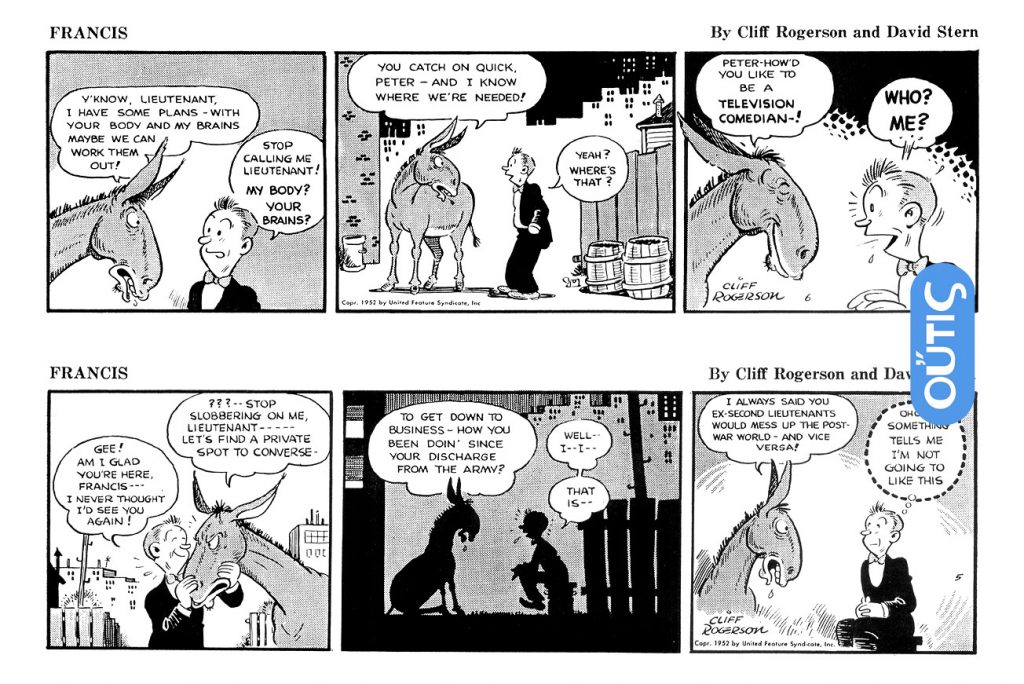
Francis the Talking Mule comic strips

Francis the Talking Mule comic strips

Nome: Francis the Talking Mule

Tratto da una serie di romanzi di David Stern 

Prima pubblicazione: 1946

Sette film dal 1950

Francis (1950) a.k.a. Francis the Talking Mule

Francis Goes to the Races (1951)

Francis Goes to West Point (1952)

Francis Covers the Big Town (1953)

Francis Joins the WACS (1954)

Francis in the Navy (1955)

Francis in the Haunted House (1956)

Strips giornaliere dal 5 maggio 1952 al ​​28 novembre 1953

Distribuita da United Feature Syndicate

Disegnata da Cliff Rogerson

Testi: David Stern  (in realtà scritta da Frank Thomas*).

* dall’esperto Alberto Becattini

Questo e molto altro su fumetto e cinema su Dizionario Cinema/Fumetto

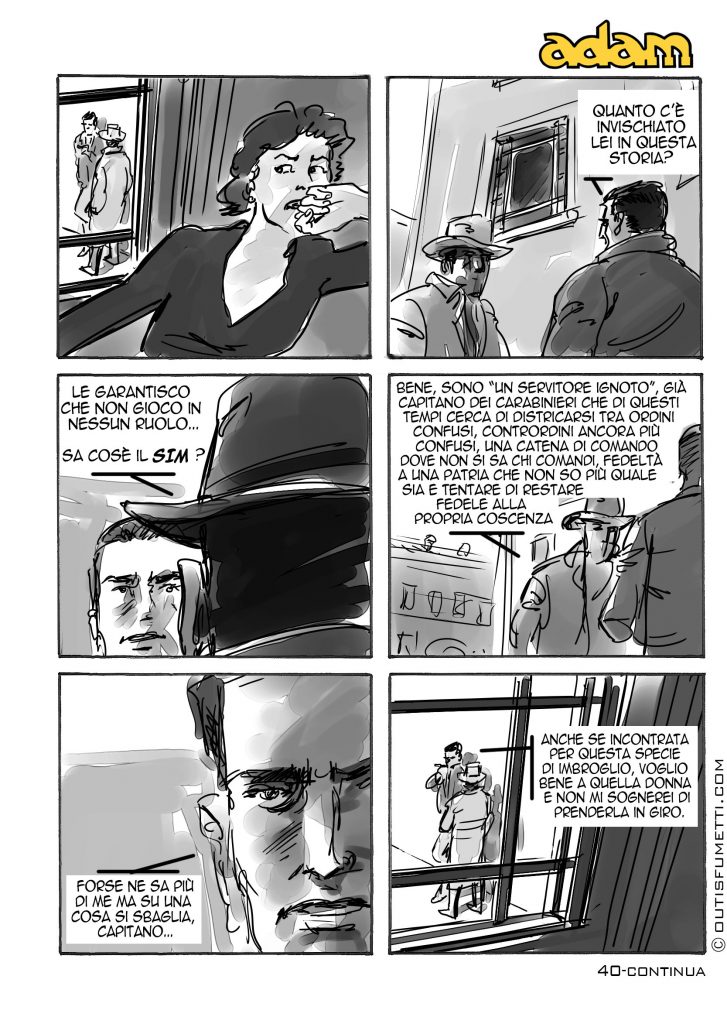
Adam‘s Rome Open City S4 E43

Adam‘s Rome Open City S4 E43

Rome, Open City (Italian: Roma città aperta, also released as Open City) is a 1945 Italian neorealist war drama film directed by Roberto Rossellini and co-written by Sergio Amidei and Federico Fellini. Set in Rome in 1944, the film follows a diverse group of characters coping under the Nazi occupation, and centers on a Resistance fighter trying to escape the city with the help of a Catholic priest. The title refers to Rome being declared an open city after 14 August 1943. It forms the first third of Rosselini’s “Neorealist Trilogy”, followed by Paisan (1946) and Germany, Year Zero (1948).

Open City is considered one of the most important and representative works of Italian neorealism, and an important stepping stone for Italian filmmaking as a whole. It was one of the first post-war Italian pictures to gain major acclaim and accolades internationally, winning the prestigious Palme d’Or at the 1946 Cannes Film Festival and being nominated for Best Adapted Screenplay Oscar at the 19th Academy Awards. It launched director Rosselini, screenwriter Fellini, and actress Anna Magnani into the international spotlight.

previous pages 42 4140393837363534333231302928 –  27  – 26 25242322212019181716  – 15  –141312111098765 4321 

Adam‘s adventure Rome Open City episode 42

Adam‘s adventure Rome Open City episode 42

Rome, Open City (Italian: Roma città aperta, also released as Open City) is a 1945 Italian neorealist war drama film directed by Roberto Rossellini and co-written by Sergio Amidei and Federico Fellini. Set in Rome in 1944, the film follows a diverse group of characters coping under the Nazi occupation, and centers on a Resistance fighter trying to escape the city with the help of a Catholic priest. The title refers to Rome being declared an open city after 14 August 1943. It forms the first third of Rosselini’s “Neorealist Trilogy”, followed by Paisan (1946) and Germany, Year Zero (1948).

Open City is considered one of the most important and representative works of Italian neorealism, and an important stepping stone for Italian filmmaking as a whole. It was one of the first post-war Italian pictures to gain major acclaim and accolades internationally, winning the prestigious Palme d’Or at the 1946 Cannes Film Festival and being nominated for Best Adapted Screenplay Oscar at the 19th Academy Awards. It launched director Rosselini, screenwriter Fellini, and actress Anna Magnani into the international spotlight.

previous pages 4140393837363534333231302928 –  27  – 26 25242322212019181716  – 15  –141312111098765 4321 

Adam‘s Rome Open City episode 41

Adam‘s Rome Open City episode 41

Rome, Open City (Italian: Roma città aperta, also released as Open City) is a 1945 Italian neorealist war drama film directed by Roberto Rossellini and co-written by Sergio Amidei and Federico Fellini. Set in Rome in 1944, the film follows a diverse group of characters coping under the Nazi occupation, and centers on a Resistance fighter trying to escape the city with the help of a Catholic priest. The title refers to Rome being declared an open city after 14 August 1943. It forms the first third of Rosselini’s “Neorealist Trilogy”, followed by Paisan (1946) and Germany, Year Zero (1948).

Open City is considered one of the most important and representative works of Italian neorealism, and an important stepping stone for Italian filmmaking as a whole. It was one of the first post-war Italian pictures to gain major acclaim and accolades internationally, winning the prestigious Palme d’Or at the 1946 Cannes Film Festival and being nominated for Best Adapted Screenplay Oscar at the 19th Academy Awards. It launched director Rosselini, screenwriter Fellini, and actress Anna Magnani into the international spotlight.

previous pages 40393837363534333231302928 –  27  – 26 25242322212019181716  – 15  –141312111098765 4321 

Comic’s Umarell

Comic’s Umarell

Umarell: “[vc. bolognese ‘omarello, ometto’ * 2007] s. m. (pl. inv. o pseudoingl. umarells) – (bolognese) pensionato che si aggira, per lo più con le mani dietro alla schiena, presso i cantieri di lavoro, controllando, facendo domande, dando suggerimenti o criticando le attività che vi si svolgono”. 

Umarell (Italian spelling of the Bolognese Emilian word umarèl, Emilian pronunciation: [umaˈrɛːl]; plural umarî) are men of retirement age who spend their time watching construction sites, especially roadworks – stereotypically with hands clasped behind their back and offering unwanted advice to the workers. Its literal meaning is “little man” (also umaréin). The term is employed as lighthearted mockery or self-deprecation.

The modern term was popularised in 2005 by local writer Danilo Masotti through three books and an associated blog. In 2021, the word was included in the Zingarelli dictionary.

Adam‘s adventure Rome Open City episode 40

Adam‘s adventure Rome Open City episode 40

Rome, Open City (Italian: Roma città aperta, also released as Open City) is a 1945 Italian neorealist war drama film directed by Roberto Rossellini and co-written by Sergio Amidei and Federico Fellini. Set in Rome in 1944, the film follows a diverse group of characters coping under the Nazi occupation, and centers on a Resistance fighter trying to escape the city with the help of a Catholic priest. The title refers to Rome being declared an open city after 14 August 1943. It forms the first third of Rosselini’s “Neorealist Trilogy”, followed by Paisan (1946) and Germany, Year Zero (1948).

Open City is considered one of the most important and representative works of Italian neorealism, and an important stepping stone for Italian filmmaking as a whole. It was one of the first post-war Italian pictures to gain major acclaim and accolades internationally, winning the prestigious Palme d’Or at the 1946 Cannes Film Festival and being nominated for Best Adapted Screenplay Oscar at the 19th Academy Awards. It launched director Rosselini, screenwriter Fellini, and actress Anna Magnani into the international spotlight.

previous pages 393837363534333231302928 –  27  – 26 25242322212019181716  – 15  –141312111098765 4321 

2 special guest…or 3?

In “The Adventure of the Grand Prix”, just reissued, there are two special guest. One easily recognizable, the second detectable only by experts and the third… by friends.

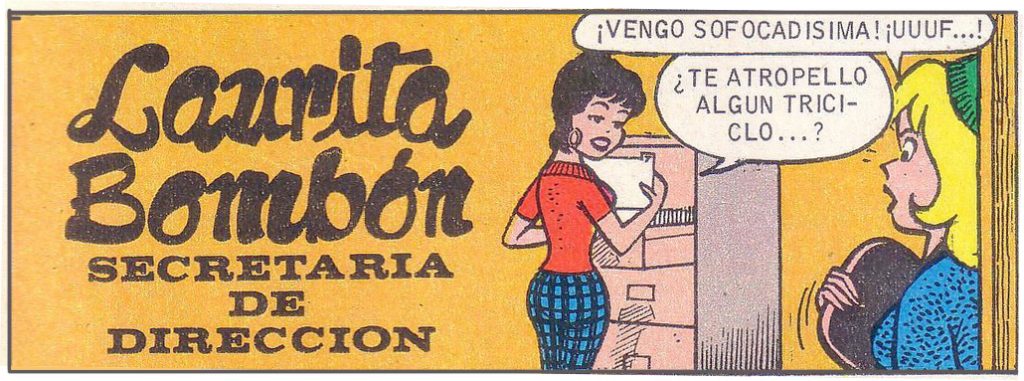
Segura’s girls: Laurita Bombon

Roberto Segura Monje was part of the generation of artists that renewed the publishing house Bruguera in the 1960s, together with IbáñezRaf and Blas Sanchis. His first comics date back to the 1950s when he contributed to such publications as A Todo Color and Florita, then to Yumbo, Pinocho and TBO.  Segura joined Bruguera in 1957. He was the creator of such series as ‘Rigoberto Picaporte’ (1957), ‘Los Señores de Alcorcón’ (1959), ‘La Alegre Pandilla’ (1963) and ‘La Panda’ (1969). Among his specialities were the series featuring attractive girls like ‘Piluca, niña moderna’ (1959) and ‘Lily’ (1962). In 1986, Segura, Raf and Ibáñez left Bruguera and joined Grijalbo publishers and the magazine Guai!. In 1991 Segura created ‘Don Roge y doña Lisistrata’ for the TBO of Ediciones B.

Para muchos, lo mejor de su producción fueron las tiras e historietas protagonizadas por jovencitas, en las cuales era experto (las alongadas pantorrillas, el pecho prieto, el rostro infantil, configurando un todo elegante), destacando: Maritina, la chica de la oficina (1958), Las chicas de Segura (1959),Piluca, niña moderna (1959), Tere Maryy Pura (1959), Lily(1962), Laurita Bombón, secretaria de dirección (1963) oMarilú (1965).

a Torino, thank heavens, non c’era

a Torino, thank heavens, non c’era

A load of (old) foolish things (aka comic strips) whom I wrote and drew, called “the Aeneid”, in the High School days.

M.