Adieu Gary Cooper by Walter Molino
Adieu Gary Cooper by Walter Molino
La Domenica del Corriere May 28, 1961
Gary Cooper, art by Walter Molino


Adieu Gary Cooper by Walter Molino
La Domenica del Corriere May 28, 1961
Gary Cooper, art by Walter Molino

Merci Cahiers de la BD
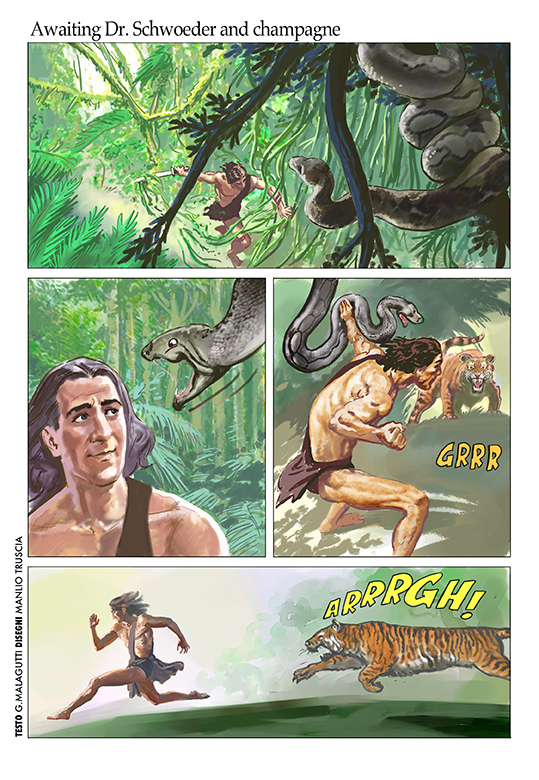
Vacanze di Pasqua a Parigi. C’ è “movimento” in questi giorni ma la città è sempre affascinante. Qualche piccolo acquisto, soprattutto libri (grazie mamma per avermi insegnato il francese). Occhieggio una rivista, Cahiers de la BD, un numero recente. La copertina rimanda l’immagine di Pravda e so che piacerebbe a zio J. In albergo la sfoglio, è dedicata alle donne nella e della BD, ci sono le sorelle Giussani. Una scorsa veloce e l’occhio cade sui nomi degli sceneggiatori/disegnatori. Sorpresa c’ è anche zio J. Gli farà piacere. Ma ne fa molto più a me, lui al solito, darà una scrollata di spalle dicendo “roba di gioventù, niente di importante.”


Ernesto Garcia Seijas non solo Helena
Alcune delle centinaia di tavole disegnate in Argentina negli anni ’70 da Ernesto Garcia Seijas. La maggior parte riduzioni a fumetti di film (pur tra artisti dotati era il migliore nelle fisionomie) di tutto il mondo. Produzione che – temiamo – resterà sconosciuta e non ristampata.


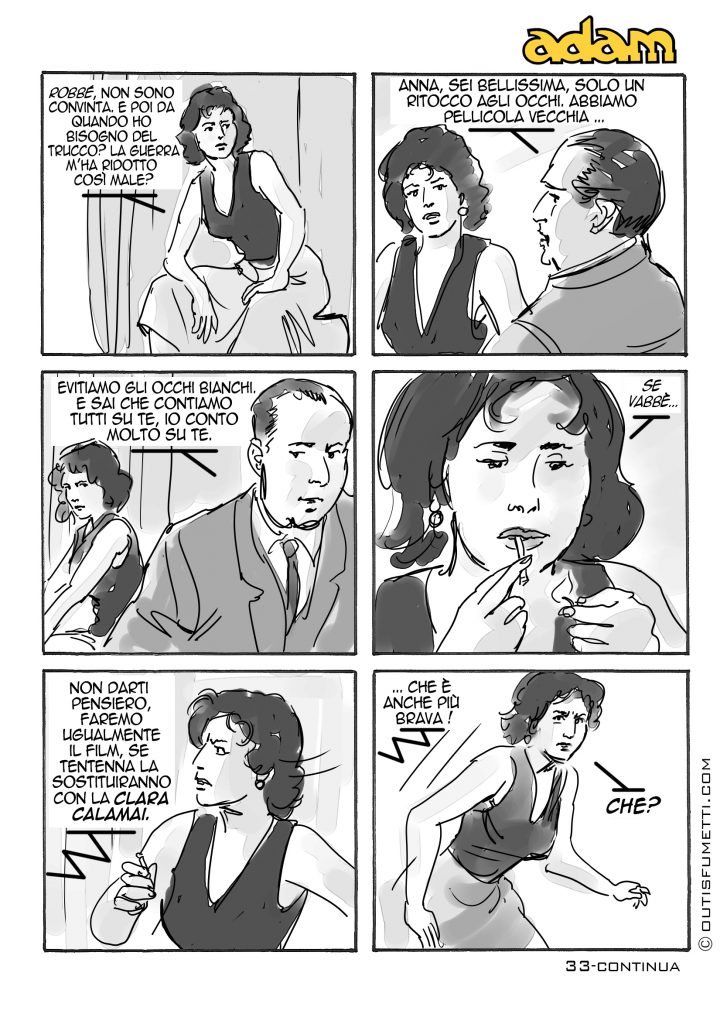
Adam‘s Rome Open City episode 33
Rome, Open City (Italian: Roma città aperta, also released as Open City) is a 1945 Italian neorealist war drama film directed by Roberto Rossellini and co-written by Sergio Amidei and Federico Fellini. Set in Rome in 1944, the film follows a diverse group of characters coping under the Nazi occupation, and centers on a Resistance fighter trying to escape the city with the help of a Catholic priest. The title refers to Rome being declared an open city after 14 August 1943. It forms the first third of Rosselini’s “Neorealist Trilogy”, followed by Paisan (1946) and Germany, Year Zero (1948).
Open City is considered one of the most important and representative works of Italian neorealism, and an important stepping stone for Italian filmmaking as a whole. It was one of the first post-war Italian pictures to gain major acclaim and accolades internationally, winning the prestigious Palme d’Or at the 1946 Cannes Film Festival and being nominated for Best Adapted Screenplay Oscar at the 19th Academy Awards. It launched director Rosselini, screenwriter Fellini, and actress Anna Magnani into the international spotlight.
previous pages 32 – 31 – 30 – 29 – 28 – 27 – 26 – 25 – 24 – 23 – 22 – 21 – 20 – 19 – 18 – 17 – 16 – 15 –14 – 13 – 12 – 11 – 10 – 9 – 8 – 7 – 6 – 5 – 4 – 3 – 2 – 1

Xtina Special

Xtina comics strip riciclata


Adam‘s Rome Manlio Truscia fired replaced by AI
from now Adam’s pages will be drawn by artificial intelligence
Adam‘s Rome Open City episode 32
Rome, Open City (Italian: Roma città aperta, also released as Open City) is a 1945 Italian neorealist war drama film directed by Roberto Rossellini and co-written by Sergio Amidei and Federico Fellini. Set in Rome in 1944, the film follows a diverse group of characters coping under the Nazi occupation, and centers on a Resistance fighter trying to escape the city with the help of a Catholic priest. The title refers to Rome being declared an open city after 14 August 1943. It forms the first third of Rosselini’s “Neorealist Trilogy”, followed by Paisan (1946) and Germany, Year Zero (1948).
Open City is considered one of the most important and representative works of Italian neorealism, and an important stepping stone for Italian filmmaking as a whole. It was one of the first post-war Italian pictures to gain major acclaim and accolades internationally, winning the prestigious Palme d’Or at the 1946 Cannes Film Festival and being nominated for Best Adapted Screenplay Oscar at the 19th Academy Awards. It launched director Rosselini, screenwriter Fellini, and actress Anna Magnani into the international spotlight.
previous pages 31 – 30 – 29 – 28 – 27 – 26 – 25 – 24 – 23 – 22 – 21 – 20 – 19 – 18 – 17 – 16 – 15 –14 – 13 – 12 – 11 – 10 – 9 – 8 – 7 – 6 – 5 – 4 – 3 – 2 – 1