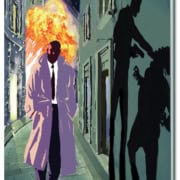
STATUS QUO political graphic novel
STATUS QUO political graphic novel
We are born incendiaries . And die as firefighters
Pittigrilli (Dino Segre)
Colonel Moretti reversed this saying

STATUS QUO political graphic novel
We are born incendiaries . And die as firefighters
Pittigrilli (Dino Segre)
Colonel Moretti reversed this saying

Comics by OutisFumetti before Covid19
New Comic Books and Graphic Novels in Spring/Summer
2021

Adam Dutch edition

Sabbioneta...tra magia e sogno Graphic Novel
Sabbioneta is a town and comune in the province of Mantua, Lombardy region, Northern Italy. It is situated about 30 kilometres (19 mi) north of Parma, not far from the northern bank of the Po River. It was inscribed in the World Heritage List in 2008.
Sabbioneta was founded by Vespasiano I Gonzaga in the late 16th century along the ancient Roman Via Vitelliana, on a sandy bank of the Po (whence the name, meaning “sandy” in Italian); he was its first duke, using it as a personal fortress and residence.
It was also during this period that it became a minor musical centre; composers such as Benedetto Pallavicino (c. 1551-1601) were employed here by Vespasiano Gonzaga, prior to his moving to the main Gonzaga city of Mantua.
Located on an alluvial ground between the Po and Oglio rivers, as well as along the route of the ancient Via Vitelliana, it occupied a strategic position in the heart of the Po Valley. For Vespasiano Gonzaga, Sabbioneta was to be above all a fortress and, at that time, the power of its walls certainly made it one of the most well-equipped bulwarks in Lombardy of Spanish domination.
Sabbioneta was above all the capital of a small state placed between great regional states: the Duchy of Milan to the west, ruled at that time by the Spanish governorate; the Duchy of Mantua to the east, over the River Oglio, governed by ancient line of the Gonzaga, cousins of Vespasiano; the Duchy of Parma and Piacenza to the south of Po, under the domain of Farnese family, supportive of Gonzaga himself.
The territory of the small state of Sabbioneta was mainly concentrated in the eastern extremity of the diocese of Cremona and it represented a necessary crossroads both for trade midway along the Po and for communications between the lowlands of Brescia and Emilia Romagna. The most prosperous period in the history of this city was in its reconstruction years, in which it was under the dominion of Prince Vespasiano I Gonzaga, which also became his residence. Sabbioneta has been honored with the “orange flag” eulogy of the Touring Club of Italy.

study for character
by Monica

continues from here, here, here
Bitter people/Better people Connie Sellecca
A cartoonist often receives requests, dedications on published volumes, original drawings with dedications, and original panels. It is not uncommon to receive such requests also from famous people. As a rule, at least in our case, it makes no difference to us. It has occurred over the years to send drawings, copies or other items to a number of comics lovers.
Almost everyone says thanks, usually via email or sometimes through a card. And from the closest people (in the sense of personal relationships), it’s through a phone call. Sometimes it’s even via a small or symbolic gift.
But this is not always a custom among the famous people. But let’s not talk about those who, after making a request, do not find the time to say thanks. Let’s leave them to their rudeness.
Let us talk about beautiful people instead.
The same occurred with the beautiful Connie Sellecca. Here the contact was even less intense and was apt to being beautifully ignored.
The background: we were studying a new female character and among the possible candidates to turn to, Ms. Sellecca was the first choice. Many preparatory drawings were made but the series did not start. A few years later, those drawings returned to popularity again. So we made a small package with an accompanying letter. We were amused by the idea that she, being unaware, was leading her life on the other side of the world where some “desperate” people wanted to take her as a model. We thought she would not give it a damn, or, in the worst case, be annoyed by this invasion into her life. But smart people always make the right move.
And a letter of compliments and thanks arrived.

October with Anna and Mathias
SERIE: Mathias
STORY/ART: Giancarlo Malagutti
GENRE: Adventure/Mystery/Thriller/Fantasy
TARGET READERSHIP: All ages, both sexes
SETTING: Well known and characteristic cities and locations in Italy
SET IN: The Present Day
STRUCTURE & TONE OF THE STORIES: The two protagonists in this series are children and, despite their superhuman potentialities, they behave as such. They always travel accompanied by an adult, they never go out late at night and wherever they stay they’re in the company of relatives. It is within this context that the storyline develops in its own way. They’re not out to put the world to rights, yet they are endowed with a strong sense of justice and they seek to do good in the face of evil.
COLLECTION: Each episode is 44 pages long and is a complete and free-standing story.
Reading them in order is recommended. In full colors.
5 episodes ready for print.
THE PROTAGONISTS:
Mathias is a blond 10 year-old. He’s knowledgeable for his age as a result of his somewhat cosmopolitan education.
Anna is a freckly 10 year-old redhead. Orphaned at an early age she has an elderly bedridden granny. Lively, intelligent and with a searching mind, she’s the one with the sense of humour and sharp one liners.
ARTIST BIO: Giancarlo Malagutti began his career in 1973 by drawing cartoons for the monthly publication Horror. He has worked alongside Renzo Barbieri and Giorgio Cavedon on several cartoons. Malagutti has drawn several one off short stories for Intrepido, Monello and Albo TV and has inked the drawings of Sergio Zaniboni for Diabolik which is where he began to write scripts. In 1981 he began freelancing for IF, working on Japanese cartoons including Princess Zaffiro, Tiger Man and Bia. In 1982 he created the series The Reporters drawn by Zaniboni for Orient Express. After having written a story line for Martin Mystère he worked as a commercial artist for some twelve years until 1994 when he resumed his work in cartoons, writing stories for Lupo Alberto, Cattivik and Mystère. Most recently he has been working on the characters of Chris Carella in collaboration with Sergio Zaniboni and both the drawings and script for Mathias.
(For a short biography visit http://www.lambiek.net/artists/m/malagutti_giancarlo.htm)

Dante Alighieri Graphic Novelist
Dante Alighieri (Italian: [ˈdante aliˈɡjɛːri]), probably baptized Durante di Alighiero degli Alighieri and often referred to simply as Dante (/ˈdɑːnteɪ, ˈdænteɪ, ˈdænti/, c. 1265 – 1321), was an Italian poet. His Divine Comedy, originally called Comedìa (modern Italian: Commedia) and later christened Divina by Giovanni Boccaccio, is widely considered the most important poem of the Middle Ages and the greatest literary work in the Italian language.
Dante is known for establishing the use of the vernacular in literature at a time when most poetry was written in Latin, making it accessible only to the most educated readers. His De vulgari eloquentia (On Eloquence in the Vernacular) was one of the first scholarly defenses of the vernacular. His use of the Tuscan dialect for works such as The New Life (1295) and Divine Comedy helped establish the modern-day standardized Italian language, and set a precedent that important later Italian writers such as Petrarch and Boccaccio would follow

Dante was instrumental in establishing the literature of Italy, and his depictions of Hell, Purgatory and Heaven provided inspiration for the larger body of Western art. He is cited as an influence on Geoffrey Chaucer, John Milton and Alfred Tennyson, among many others. In addition, the first use of the interlocking three-line rhyme scheme, or the terza rima, is attributed to him. He is described as the “father” of the Italian language,[9] and in Italy he is often referred to as il Sommo Poeta (“the Supreme Poet”). Dante, Petrarch, and Boccaccio are also called the tre corone (“three crowns”) of Italian literature.

Dante Alighieri graphic novel
Dante Alighieri, probably baptized Durante di Alighiero degli Alighieri and often referred to simply as Dante (1265 – 1321), was an Italian poet. His Divine Comedy, originally called Comedìa (modern Italian: Commedia) and later christened Divina by Giovanni Boccaccio, is widely considered the most important poem of the Middle Ages and the greatest literary work in the Italian language.
Dante is known for establishing the use of the vernacular in literature at a time when most poetry was written in Latin, making it accessible only to the most educated readers. His De vulgari eloquentia (On Eloquence in the Vernacular) was one of the first scholarly defenses of the vernacular. His use of the Tuscan dialect for works such as The New Life (1295) and Divine Comedy helped establish the modern-day standardized Italian language, and set a precedent that important later Italian writers such as Petrarch and Boccaccio would follow.
Dante was instrumental in establishing the literature of Italy, and his depictions of Hell, Purgatory and Heaven provided inspiration for the larger body of Western art. He is cited as an influence on Geoffrey Chaucer, John Milton and Alfred Tennyson, among many others. In addition, the first use of the interlocking three-line rhyme scheme, or the terza rima, is attributed to him. He is described as the “father” of the Italian language,[9] and in Italy he is often referred to as il Sommo Poeta (“the Supreme Poet”). Dante, Petrarch, and Boccaccio are also called the tre corone (“three crowns”) of Italian literature.
* We are looking for an alternative artist

Where do Anna and Mathias run?