Tag Archivio per: bande horizontales

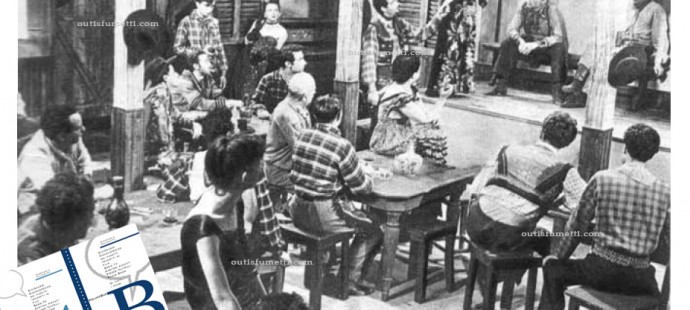
Piccolo Sceriffo il Film ritrovato

Piccolo Sceriffo il Film che forse pochi hanno visto. 

Piccolo Sceriffo è un personaggio del fumetto italiano creato dalla fantasia di Tristano Torelli e dalla matita di Camillo Zuffi.

Il Piccolo Sceriffo appartiene ad una schiera di eroi adolescenti molto diffusi negli anni cinquanta e sessanta (come Capitan Miki, il Piccolo Ranger e tanti altri) voluti così giovani per favorire la loro identificazione con i potenziali acquirenti, i ragazzi, che grazie alla vicinanza di età potevano rispecchiarsi nei protagonisti delle avventure a fumetti.

Info e molto di più sui nostri volumi dell’Enciclopedia Fumetto/Cinema


Comic book market the situation

Comic book market the situation


Concept: Giancarlo Malagutti

Art: Manlio Truscia

Xtina #2 new book

Xtina #2 new book, october 2016

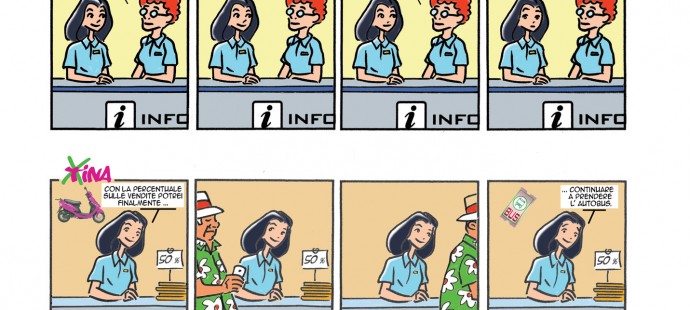
Xtina comic strips are centered on the life of Xtina in her work as assistant in a Museum. Xtina’s chronicles the daily challenges of a worker. At work, we follow Xtina as she copes with friends, relationships, and the day-to-day trials of a working woman living life in the 21st century.

Xtina’s #2 new book comic-strip, subject, Art and Script-writer: Monica

Xtina Sunday comic-strip

Xtina Sunday comic-strip

Xtina comic strips are centered on the life of Xtina in her work as assistant in a Museum. Xtina’s chronicles the daily challenges of a worker. At work, we follow Xtina as she copes with friends, relationships, and the day-to-day trials of a working woman living life in the 21st century.

Xtina’s comic-strip, subject, Art and Script-writer: Monica

xtina_2_cover

volume 2 scheduled for fall 2016

Gerald Norton or Judd Saxon?

The name of the protagonist  Judd Saxon – and consequently the strip –  was changed in Gerald Norton” in France-Soir newspaper, in the late 1950s, then a monthly pocket Edi-Europe from 1964.

judd_saxon

JUDD SAXON, art   Ken Bald  57-61 -wr   Jerry Brondfield  57-61

Soap Opera was a term coined about 1940 to describe sentimental radio serials promoted to ‘the millions’ by sponsors of soap, coffee, cleanser and personal deodorant. The soaps were nothing startlingly new or original — they had their genesis in the early nineteenth century in stage melodrama and penny parts serials. Thomas Peckett Prest serialized Fatherless Fanny; or, the Mysterious Orphan (1841), in Reynolds’s Miscellany James Malcolm Rymer serialized The Divorce, a Story of Fashionable Life (1859), and George Biggs’ Family Herald (1843) offered weekly serials almost exclusively tailored to women. 

Comic strip soap opera’s heroes and heroines were solidly white middle class supporters of the status quo. The villains were not of the horrid Dick Tracy sort, like Mumbles or The Mole, rather they were mostly indistinguishable from the middle class heroes. Jane Arden’s handsome villains sometimes sported an identifying moustache, occasionally a crooked nose, but usually they resembled that clean-cut boy next door.

cont,d in Yesterday’s Papers


Comic Strips French Golden Age: Hoviv

Hoviv, Basile, 1966 dans Tintin magazine.

Hoviv (de son vrai nom René Hovivian) est un dessinateur humoristique français né en 1929 à Vienne (Isère) et décédé le 28 mai 2005 à Clamart.

En 1946, à 17 ans, il entre aux beaux-arts de Lyon et publie ses premières bandes dessinées «SOS Dakota » et « Indianapolis Sanglant ». L’année suivante, en 1947, il part s’installer en Arménie soviétique avec sa famille et ne reviendra en France qu’en 1964.

Comme des milliers d’autres Arméniens attirés par le «Paradis Communiste», sa famille quitte la France pour l’Arménie soviétique, pays de l’URSS . Là, il rentre à l’usine et devient soudeur à l’arc, mais en 1949 lui et sa famille sont déportés en Sibérie centrale, dans la Taïga (son père ayant été soupçonné de sympathies Dachnak). Il y sera bûcheron. Libéré en 1956, il s’installe à Moscou un an plus tard et entre aux studios de Cinéma d’état. Il y apprend le dessin animé et participe à plusieurs créations. Il commence sa carrière de dessinateur humoristique en publiant dans les principaux journaux et magazines moscovites dont Krokodil, Ogonek , les Nouvelles de Moscou. En France dans les années 1980, il s’engagera en politique à droite.

Ses dessins ont été publiés dans de nombreux journaux : Le Hérisson, Marius, Ici Paris, Jours de France, Lui, Le Quotidien de Paris, ainsi que dans divers ouvrages, dont Je réussis mon entretien d’embauche et CV : les lettres clés de ma carrière, de Marie-Françoise Guignard et Jean-Pierre Thiollet, parus à plusieurs reprises, aux Editions Amarande puis chez Jean-Cyrille Godefroy.

Beaucoup de ses dessins ont pour sujet le sexe (notamment la série Les Mâles) ou la politique (par exemple « Les Kamarades »). Vers la fin de sa vie, il publiera deux albums sur la diaspora arménienne, sa communauté d’origine.


from wikipedia

Xtina one year of paper

Centered on the life of Xtina, in her work as assistant in a Museum, Xtina’s chronicles the daily challenges of a worker. At work, we follow xtina as she copes with friends, relationships, and the day-to-day trials of a working woman living life in the 21st century.

Nuovo personaggio nella sezione comics de “la Nuova Cronaca di Mantova”: Xtina. Scritto e disegnato da MonicaF. Xtina è una strip che racconta con ironia le vicissitudini di una giovane ragazza al suo primo impiego – a tempo determinato – in un museo in una qualsiasi  città italiana. Il settimanale “Cronaca” da tempo, tra le notizie di cronaca, politica e costume, concede spazio al fumetto sia come proposta di storie che come recensioni, interviste e saggi critici. Il fine ultimo dell’editore è quello di arrivare a staccare la sezione per farne un periodico autonomo per ragazzi. In attesa di definizione del budget e – soprattutto di buoni fumetti da pubblicare – un numero zero (test) sta per vedere la luce – per ora – solo nella provincia mantovana.


Dizionario Fumetto/Cinema tutti fumetti tradotti in film

Il primo volume del Dizionario Fumetto/Cinema è in stampa. Comprende tutti i fumetti tradotti in film, serieTV, cartoni animati, piéces teatrali e radio show. Un’opera mastodontica che alla fine. compreso il volume aggiornamento , raggiungerà le 5000 schede.

Prenotabile da ora su questo sito.

a cura di: Monica F.


French artist: Claude Jambers

Nathalie détective chérie, testo Franck Marchal, art Claude Jambers, 110 strips, France Soir, 1959

artisti del passato FRICK

Achille Letordu era una strip settimanale pubblicata su La Voix du Peuple e L’Avant-Garde dal 1938 al 1939. Creata e disegnata da Frick.