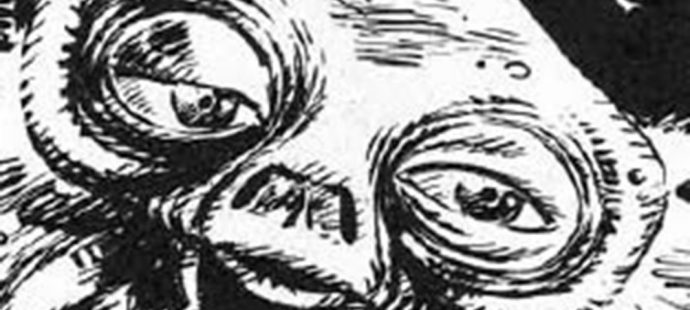
This is not E.T.
This is not E.T.
It’s Melvin.
8 years before E.T.
http://loquenoverasenmuseoss.blogspot.com/2014/06/joaquin-blazquez-plagios-y.html

This is not E.T.
It’s Melvin.
8 years before E.T.
http://loquenoverasenmuseoss.blogspot.com/2014/06/joaquin-blazquez-plagios-y.html

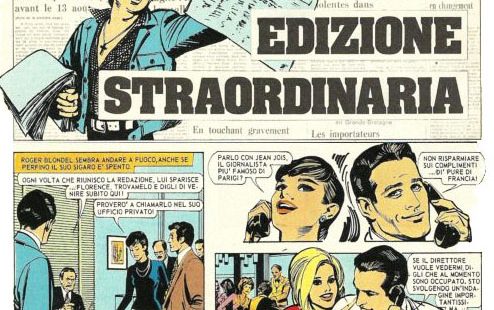
Fare colazione con Tintin, i corn-flakes.
In occasione dell’uscita del film Tintin – Il segreto dell’Unicorno sonostate prodotte delle confezioni di corn-flakes con le immagini del film.

How beautiful you were Chris Carella
What can you say about a character who never born?
She was beautiful!
And intelligent.
She loved Moon River sung by Audrey Hepburn
and she crying with Casablanca.
Chris Carella was this and much more.
Chris Carella was a mixture of drama, comedy, and romance,(comedy-drama, or “dramedy”) and was one of the good examples of script by comic.
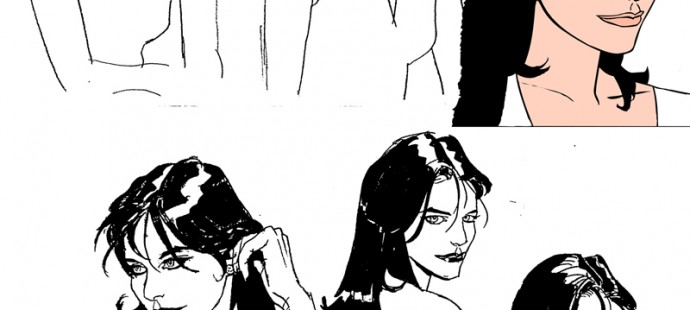
If only there was a cartoonist capable of drawing her like the original!
Cosa si può dire di un personaggio mai nato?
Che era bella!
E intelligente.
Amava Moon River cantata da Audrey Hepburn
e piangeva con Casablanca.
Chris Carella era questo e molto altro.
Chris Carella era un misto di dramma, commedia, romanticismo e, (commedia-dramma, o “dramedy”) ed è stato uno dei migliori esempi di scrittura di fumetti.
Se solo ci fosse un cartoonist capace di disegnarla come l’originale!

George Clooney or Dad?
When the creators of Chris Carella were trying a face for her partner, Steve, they had thought of a young actor, George Clooney. Then they saw the father (and illustrator) of Monica.
And the character was found.

Audrey Hepburn a fumetti
This is not E.T.
It’s Melvin.
8 years before E.T.
http://loquenoverasenmuseoss.blogspot.com/2014/06/joaquin-blazquez-plagios-y.html
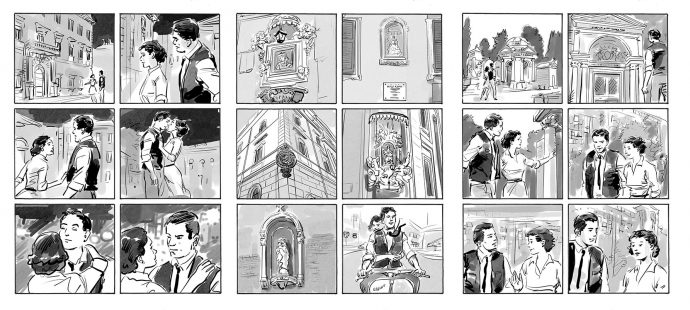
storyboard by outisfumetti
In addition to creating original comics, the outisfumetti studio sells ideas, Original screenplays with “built-in audiences”and creates storyboards for cinema and TV
In 2008, TIME magazine identified a term modeled after “jump the shark”: “nuke the fridge.” Specifically applicable to film, the magazine defined the term: “to exhaust a Hollywood franchise with disappointing sequels. “The phrase derives from a scene in the fourth Indiana Jones film, Indiana Jones and the Kingdom of the Crystal Skull, in which Indiana Jones survives an atomic bomb detonation by fitting himself into a lead-lined refrigerator. The explosion annihilates its surroundings but sends the refrigerator flying sufficiently distant for the protagonist to escape unhurt. The scene was criticized as being scientifically implausible.
Next: Marry Irving
In the military, D-Day is the day on which a combat attack or operation is to be initiated. The best known D-Day is during World War II, on June 6, 1944—the day of the Normandy landings—initiating the Western Allied effort to liberate mainland Europe from Nazi Germany. However, many other invasions and operations had a designated D-Day, both before and after that operation.
The terms D-Day and H-Hour are used for the day and hour on which a combat attack or operation is to be initiated. They designate the day and hour of the operation when the day and hour have not yet been determined, or where secrecy is essential. For a given operation, the same D-Day and H-Hour apply for all units participating in it. When used in combination with numbers, and plus or minus signs, these terms indicate the point of time preceding or following a specific action. Thus, H−3 means 3 hours before H-Hour, and D+3 means 3 days after D-Day. (By extension, H+75 minutes is used for H-Hour plus 1 hour and 15 minutes.) Planning papers for large-scale operations are made up in detail long before specific dates are set. Thus, orders are issued for the various steps to be carried out on the D-Day or H-Hour minus or plus a certain number of days, hours, or minutes. At the appropriate time, a subsequent order is issued that states the actual day and times.
History
The earliest use of these terms by the United States Army that the U.S. Army Center of Military History has been able to find was during World War I.[3] In Field Order Number 9, First Army, American Expeditionary Forces, dated 7 September 1918: “The First Army will attack at H hour on D day with the object of forcing the evacuation of the St. Mihiel Salient.”
D-Day for the invasion of Normandy by the Allies was originally set for June 5, 1944, but bad weather and heavy seas caused U.S. Army General Dwight David Eisenhower to delay until June 6 and that date has been popularly referred to ever since by the short title “D-Day”. Because of the connotation with the invasion of Normandy, planners of later military operations sometimes avoided the term to prevent confusion. For example, Douglas MacArthur‘s invasion of Leyte began on “A-Day”, and the invasion of Okinawa began on “L-Day”. The Allies’ proposed invasions of Japan would have begun on “X-Day” (on Kyūshū, scheduled for November 1945) and “Y-Day” (on Honshū, scheduled for March 1946).
From Wikipedia, the free encyclopedia